
Custom Orthotics & Biomechanics
More Than a Mold. More Than an Insert. Made for How You Move. A truly custom orthotic begins with understanding the person who will wear it. Dr. Jengyu Lai evaluates your foot structure, biomechanics, movement, symptoms, activities, and functional goals before determining whether an orthotic is appropriate—and, if so, how it should be designed specifically for you.
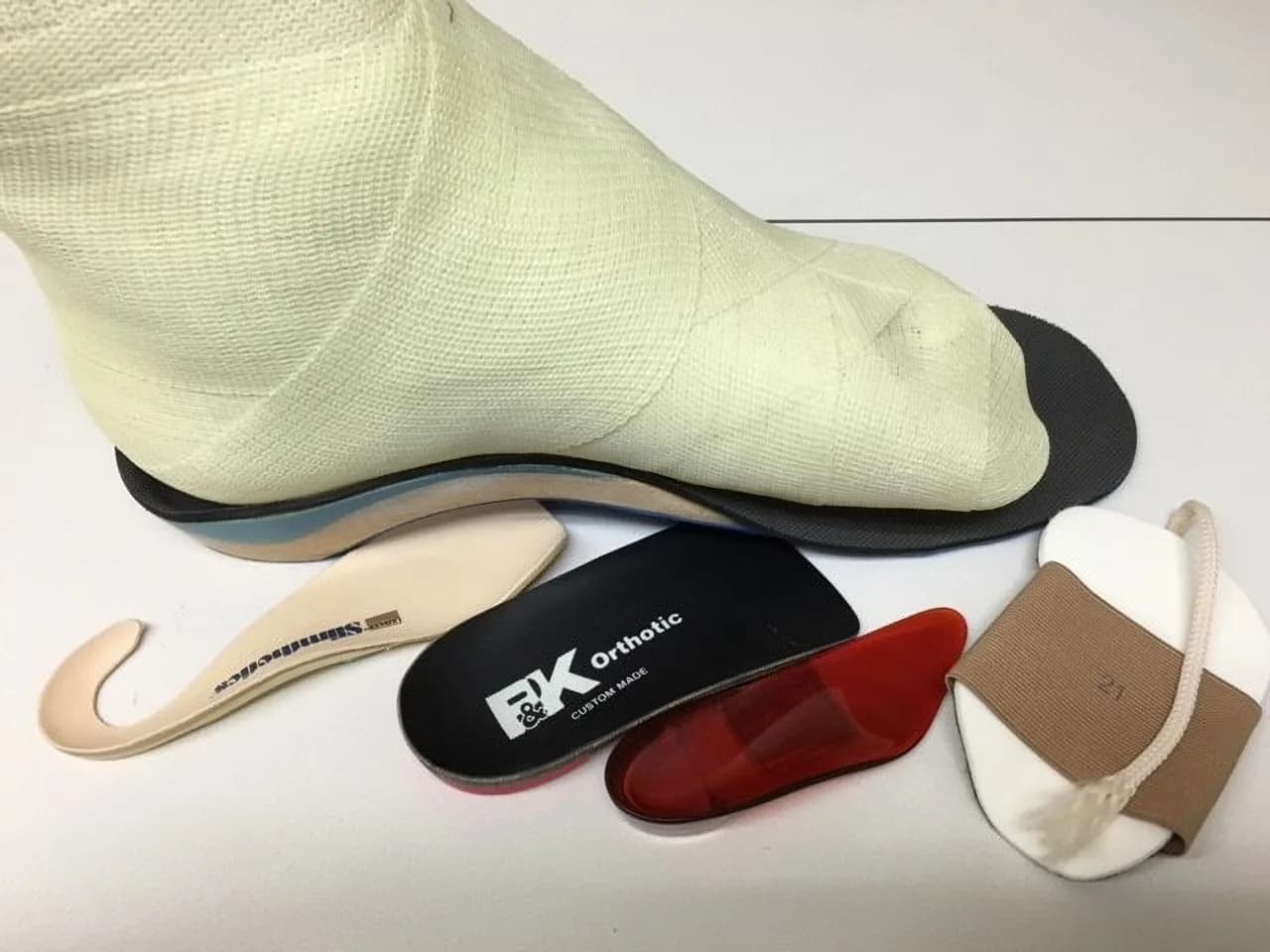
Custom Means More Than Fitting Your Foot
A Custom Orthotic Is a Medical Prescription
Not everything called a "custom orthotic" is truly individualized. Some products are selected from existing sizes or shapes based primarily on the appearance or dimensions of the foot. A prescription custom orthotic is different.
At Rochester Clinic, the process begins with a physician evaluation. Dr. Lai assesses the patient, performs the casting, and develops a detailed prescription that may specify the materials and design characteristics for the arch, heel, forefoot, and other individual considerations.
The science is understanding biomechanics. The art is applying it to the individual.
The difference is not simply how the orthotic is made. It's how the prescription is developed.
Two Types of Prescription Orthotics
Functional or Accommodative?
Which one you need is decided by the evaluation and clinical need, not by choosing a product off a shelf.
Functional Orthotics
Designed to Influence Movement & Loading
Functional orthotics are designed to influence how the feet function and how forces are distributed during standing, walking, running, sports, and other activities.
Often used to:
- Improve foot and ankle mechanics and stability
- Redistribute abnormal loading
- Reduce stress on painful structures
- Accommodate structural differences
- Support specific work, recreational, or athletic activities
Accommodative Orthotics
Designed to Cushion, Protect & Redistribute Pressure
Accommodative orthotics are designed primarily to accommodate the shape of the foot, cushion sensitive areas, and redistribute pressure.
Often appropriate for:
- Diabetes and peripheral neuropathy
- Painful calluses or areas of high pressure
- Prominent bones or foot deformities
- Rheumatoid nodules
- Fat-pad loss
The Process
From First Visit to Finished Orthotic
- 01
Assess
History and biomechanical evaluation.
- 02
Cast or Scan
Capture your individual feet in the appropriate position.
- 03
Prescribe & Customize
Activity, materials, and shape specified for you, then built and tuned to your feet.
- 04
Fit & Follow Up
Comfort, function, and footwear, checked over time.
Step 1: Assess
The Scan Doesn't Come First. The Evaluation Does.
An orthotic for someone who wants to walk comfortably through the workday may not need to accomplish exactly the same thing as one designed for someone returning to running, pickleball, prolonged standing, or other activities.
A custom functional foot orthotic should not begin by simply scanning someone's feet and sending the image to a laboratory. At Rochester Clinic, the process begins with a detailed history and biomechanical assessment.
The foot and ankle interact with the way you stand, walk, load the ground, and move through daily activities.
Dr. Lai's evaluation looks at three areas:
Your Symptoms & History
Where are you experiencing pain or difficulty?
- Symptoms and diagnosis
- Previous injuries and treatments
- Previous experience with orthotics
Your Activities & Footwear
What demands do you place on your feet, and what shoes will you wear?
- Occupation
- Sports and recreation
- Running or sports mechanics when appropriate
- Footwear
Your Mechanics
How do you move?
- Alignment and biomechanics
- Foot and ankle structure
- Joint range of motion
- Muscle strength and flexibility
- Standing and walking patterns
- Areas of abnormal loading
Then the question that shapes everything: what do you want to be able to do?
This information helps determine what the orthotic actually needs to accomplish.
Step 2: Cast or Scan
How Are Custom Orthotics Cast?
After the examination, the feet are cast or scanned in the position determined to be appropriate for the functional prescription.
The casting or scanning method depends in part on what type of orthotic is being made and what the device is intended to accomplish.
For an accommodative orthotic, the goal is generally to capture and accommodate the contours of the foot so that pressure can be cushioned or redistributed appropriately.
For a functional orthotic, the position of the foot during casting or scanning is especially important. The foot is captured in a controlled neutral position determined through the biomechanical examination, rather than simply reproducing the shape of the foot as it happens to stand under full body weight.
Depending on the device and clinical need, the foot may be captured using a three-dimensional scan, plaster cast, or other appropriate impression technique.
Step 3: Prescribe & Customize
This Is Where the Orthotic Actually Gets Designed.
Then comes one of the most important—and often overlooked—parts of making a custom orthotic: writing the prescription.
A three-dimensional scan shows the shape of the foot. It does not, by itself, determine how the finished device should function. A custom functional orthotic prescription may specify:
Intended Activity
What will you use the orthotics for? A device intended for everyday walking may be different from one designed for running, court sports, hiking, golf, prolonged standing, work boots, or dress shoes.
Material
Material affects rigidity, flexibility, thickness, weight, cushioning, and response to loading—selected based on biomechanics, body size, activity, footwear, diagnosis, and goals.
Forefoot Position
The relationship between the forefoot and rearfoot affects how forces are distributed. The prescription can support, accommodate, or influence forefoot position and loading.
Heel Position
The heel plays an important role in stability and the way forces move through the foot and ankle. Features may influence or accommodate heel position, motion, stability, and loading.
Arch Contour
Custom arch support is more sophisticated than choosing low, medium, or high. The contour is prescribed according to foot structure, biomechanics, comfort, activity, and goals.
Device Width
Width can be customized according to foot shape, footwear, activity, and the desired amount of contact and support.
Shell Modifications
The shell can be modified to change how the device interacts with the foot—altering loading, improving stability, accommodating structural differences, or reducing stress on an area.
Top Cover & Additional Modifications
Cushioning, top covers, pads, extensions, pressure-relief areas, forefoot and heel modifications, and accommodations for sensitive areas.
The cast captures your foot. The prescription determines what the orthotic is designed to do.
Two people could have feet that appear similar on a scan but require very different orthotics because they have different symptoms, biomechanics, activities, footwear, or treatment goals. That's why a truly individualized functional orthotic involves more than creating a three-dimensional model of the foot.
Step 4: Fit & Follow Up
The Fit Isn't Finished When the Orthotics Arrive.
When the orthotics arrive, Dr. Lai checks the fit and watches how you move in them. Comfort, function, footwear, and your response guide any adjustments.
Why Dr. Lai?
Specialized Training in Podiatric Orthopedics & Biomechanics
28+ Years Clinical Experience
Experience applying biomechanics to patient care.
Podiatric Orthopedics & Biomechanics
Advanced understanding of structure, movement, and mechanical function.
Mayo Clinic Fellowship Training
Broader rehabilitation and research perspective.
Hands-On From Start to Finish
Dr. Lai personally assesses, casts, and writes the prescription.
Complex Medicine. Personalized for One Patient.
Dr. Lai's role is to take the complexity of biomechanics, clinical findings, symptoms, activity demands, and patient goals and translate them into a treatment plan that makes sense for the individual. When an orthotic is appropriate, the device follows from that clinical reasoning.
Conditions That May Benefit From Biomechanical Evaluation
Where Orthotics May Fit In
Custom Orthotics Are One Part of the Plan
The Goal Isn't an Orthotic. The Goal Is Better Function.
Not every patient needs an orthotic, and an orthotic may be only one part of a treatment plan. Depending on the evaluation, care may also involve changes in footwear, activity, exercises, other mechanical support, treatment of the underlying condition, or other appropriate therapies.
The question is not simply
Do I need orthotics?
It is
What will help me move and function better?
Your Orthotics Should Be as Individual as You Are
If pain, alignment, movement, or recurring foot problems are interfering with what you want to do, start with a biomechanical evaluation—not a product. Let's understand how you move.